Architecture & lighting design
Have you ever experienced an architecturally brilliant space that still seemed... kind of lifeless? That strange moment when everything should be perfect — impressive materials, well-thought-out proportions — and yet something essential is missing?
As lighting experts, we experience exactly this situation again and again: A freshly completed luxury penthouse, a redesigned restaurant or a modern office building that looked breathtaking in the renderings but does not have the desired effect in reality. The architect stands by the side irritated and asks himself: “What is wrong here?”
The answer is as simple as it is profound: Even the best architecture is just an empty framework without the right light.
In our 15 years of experience with over 500 completed lighting projects in the DACH region, we have observed a recurring pattern: Light is often treated as a subsequent “add-on”, not as an integral part of the design process. This hierarchy is literally upside down.
The typical planning process usually goes like this:
Yet it is precisely the light that:
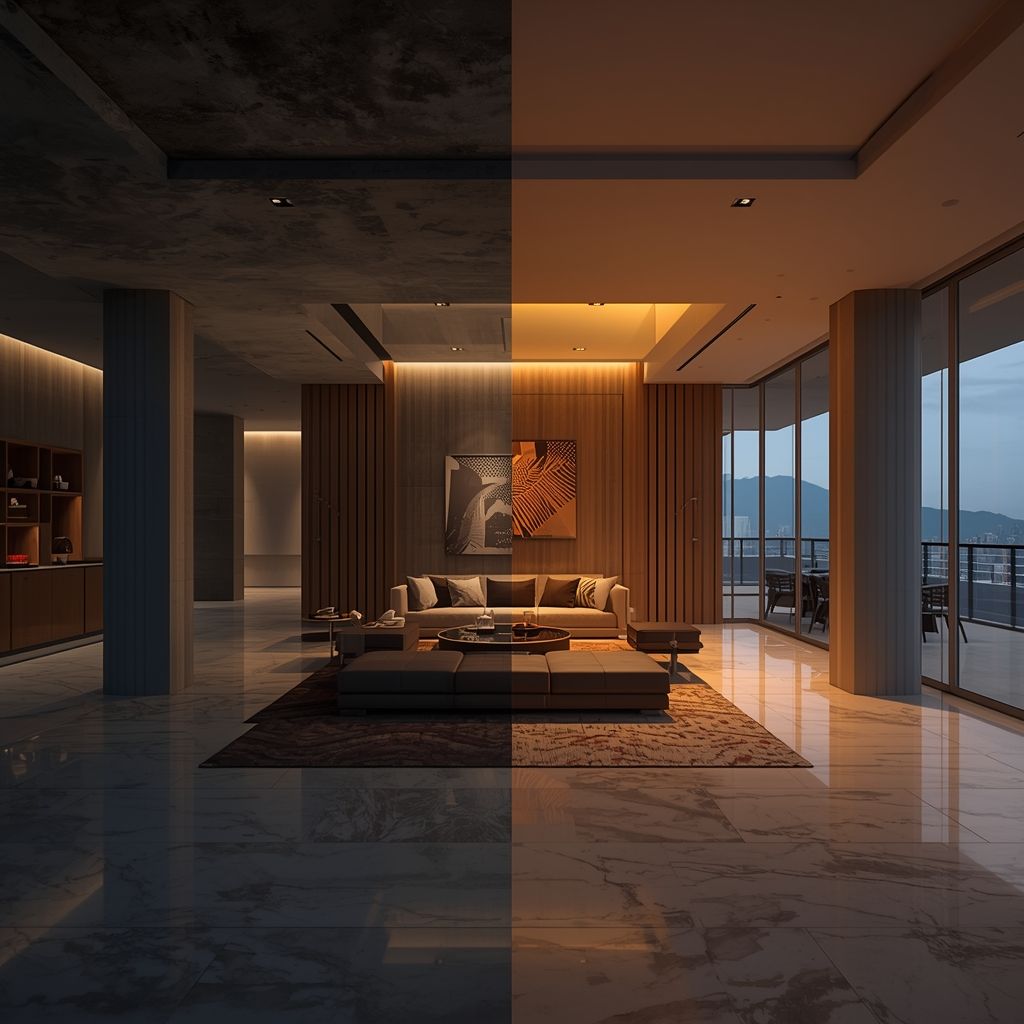
A few months ago, we carried out a fascinating experiment: We equipped the same architectural structure with three different lighting concepts. The results were astonishing:
Version A (functional light):
The space appeared flat, bigger but cooler and less inviting. Perfect for concentrated work, but not for extended periods of time.
Version B (accentuated light):
Textures suddenly appeared and the space felt more intimate and valuable. The architecture gained in depth and character.
Variant C (Human Centric Lighting):
Not only did the perception of space change, but also the well-being and interaction of people in it. The room became an experience that changed dynamically over the course of the day.
The same architecture, three completely different experiences — through light alone.
Why do so many projects fail due to the right lighting design? From our experience, there are four main reasons:
What if we reverse the process? What if we integrated light not as a last step but as a fundamental design element right from the start?
The most innovative architects we work with have already completed this paradigm shift. They think in lighting moods before they draw floor plans. You understand: Architecture may be the skeleton — but light is the soul of space.
At LEDFORLIVING, we have developed a structured approach that makes lighting planning an integral part of the design process. Our Gamechanger lighting method combines:
A successful lighting concept does not start with the selection of luminaires, but with an understanding of the architectural vision and the desired spatial effect. Here are our key recommendations:
Architecture creates space, but it is only light that makes it tangible. A well-thought-out lighting concept, which is integrated from the outset, is not a luxury, but a necessity for every successful project.
The question is no longer whether you can afford professional lighting design, but whether you can afford to do without it. Because in the end, there is the insight that architecture without light is like a painting without colors — unfinished.
Are you ready to regard light as an equal partner in the design process? Would you like to learn how our Gamechanger Lighting method can help your next project make a breakthrough?
[Get a free initial consultation now]
In a non-binding discussion, we will analyse your project and define the next steps for your success together.
When should lighting planning start in a construction project?
Ideally, lighting planning starts parallel to the initial design phase. The basic lighting concepts should be finalized at the latest before construction planning is completed in order to avoid costly changes.
How does professional lighting design differ from standard lighting?
Professional lighting planning takes architecture, materials, use and emotional impact equally into account. It combines different light levels (basic light, accent lighting, functional lighting) to create a harmonious overall concept, while standard solutions usually only aim for uniform illumination.
What role does energy efficiency play in modern lighting design?
Modern LED technology and intelligent control systems enable energy savings of 30-50% compared to conventional solutions. Well-thought-out lighting design combines aesthetics with sustainability without compromising on lighting effects.
How can I evaluate the effect of a lighting concept before installation?
Photorealistic 3D visualizations and lighting calculations make it possible to experience the planned lighting effect in advance. At LEDFORLIVING, we create detailed renderings that provide a well-founded basis for decision-making.
Absolutely. Especially with a limited budget, well-thought-out lighting planning is crucial in order to make optimal use of the available funds. Clever concepts can often even save costs by making targeted investments where light has the greatest effect.

.svg)
Address